

PEDIATRIC DENTISTRY
Your family’s dental home from the first tooth and beyond
As a parent, you want the best dental care for your child so that they can grow up knowing the importance of oral health and the proper brushing and flossing techniques. You also want them to develop a trusting relationship with the dentist and know the dentist is a friend that will always provide the necessary treatment to keep their teeth and mouth in top notch shape. Tidewater Family Dentistry is honored to be your family’s dental home and that includes providing a fun, reassuring and comfortable environment for your children. We happily see children from the time the first tooth erupts through the teen years and beyond.
The scope of care we provide in pediatric dentistry will encompass several areas that are vital in keeping your child’s teeth healthy. The main areas that Tidewater Family Dentistry will focus on include:
- Education
- Prevention
- Monitor growth and development
- Intervention
Education
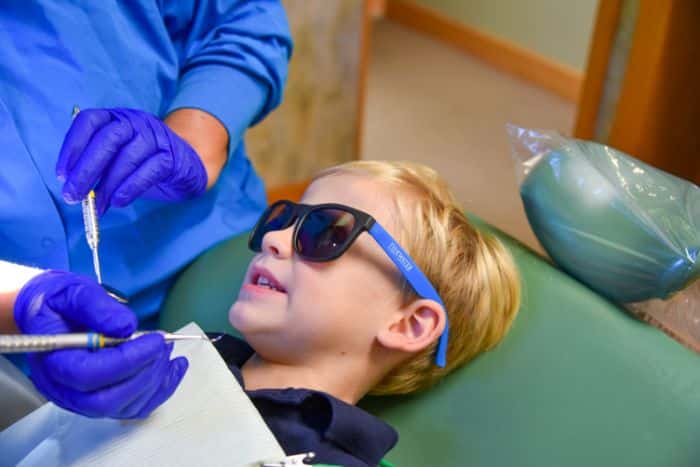
One of the best ways to get your child used to coming to the dentist is to bring him to your routine visits. This will go a long way in helping your child feel more comfortable at the dentist. Taking the time to show children the proper way to brush and floss teeth is important; however, when your child is young, he will have limited dexterity and require help from mom or dad when brushing teeth. At Tidewater Family Dentistry, we educate parents and children on proper brushing techniques that can be done at home together as your child grows and develops.
Prevention
Good preventative dental care begins early in childhood through educating parents and children on making healthy dietary choices, proper cleaning of teeth and getting rid of oral habits such as pacifier use by age 2. Preventative care for children is the same as preventative care for teens and adults. Regular visits to the dentist for 6 month checkups, routine x-rays as needed and fluoride treatments are the standard of care for pediatric patients.
Sealants are often offered to pediatric patients as a way to protect the back molars from decay. Sealants are quick and easy to apply and can be done during a routine pediatric dentistry visit. The protective coating fills the peaks and valleys of the chewing surface of the back molars and can help patients who struggle to clean those teeth well. Sealants are long lasting and an effective measure used to prevent decay.
Monitoring Growth and Development
At your child’s regular checkups, we will assess the growth and development of your child’s dentition. Routine monitoring of your child’s teeth will help to identify and possibly prevent any issues that may develop as your child grows. Occasionally, dental issues in children can affect the way they speak and eat. Certain behaviors or habits can impact the development of the jaw such as:
- Pacifier use
- Thumb sucking or finger sucking
- Teeth grinding
- Mouth breathing
At Tidewater Family Dentistry, we will work with you to monitor any issues that arise during each developmental phase of your child’s dentition and discuss ways to avert habits and promote good oral function.
Intervention
It is not uncommon for a child, especially in the tween and teen years to develop cavities. The good news is that cavities are preventable with excellent home care combined with routine dental visits to catch issues like decay in the early stages. We will know when it is the appropriate time to intervene and discuss treatment options to alleviate any oral health problems. As a patient at Tidewater Family Dentistry, we will monitor the growth and development of your child’s oral health. We can also recommend the appropriate time to refer you to an orthodontic specialist to correct any malocclusion or bad bite problems.
Helping Your Child Prevent Cavities
Cavities are no fun and they are also preventable, that’s why Tidewater Family Dentistry goes above and beyond to help your child avoid decay and the treatment (a filling). Our tools to help prevent decay include:
- Regular dental visits for routine cleanings and exams
- Good oral hygiene education
- Fluoride
- Dental sealants
The “home” part of preventative care means brushing twice a day with a fluoride toothpaste and flossing regularly. Making healthy snack choices such as fresh fruit and vegetables as well as limiting sugary drinks will also help reduce the risk of decay.
If your child does happen to get a cavity, Tidewater Family Dentistry will guide your child through every step of the treatment. If you would like to learn more about how to help your child prevent cavities, call to schedule a pediatric dentistry appointment today at (757) 874-6712.
First Pediatric Dentistry Visit
At Tidewater Family Dentistry, we look forward to providing the highest standard of care for you as well as your children. We encourage parents to bring their babies and small children to normal routine dental visits so children can become familiar with the tools in the office, the office layout, the people and, of course, the dentist. To prepare your child for the first dental checkup, you can explain what will happen during the visit by reading stories and watching videos. This will help your child to be less anxious during the pediatric dentistry visit. Here are some great books to show your child in preparation for the big day!
- The Berenstain Bears Visit the Dentist – by Stan and Jan Berenstain
- Show Me Your Smile: A Visit to the Dentist – Part of the “Dora the Explorer” Series
- Going to the Dentist – by Anne Civardi
- Elmo Visits the Dentist – Part of the “Sesame Street” Series
We have several boxes to check during your baby’s first dental visit. We will count teeth, evaluate the health of the teeth and gums and educate you on the best way to take of your baby’s teeth. Below is the sequence of events that usually takes place during a routine pediatric dentistry checkup.
- Dental staff will greet the child and parents.
- The infant/family health history will be reviewed (this may include questionnaires).
- The dentist will address parental questions and concerns.
- More questions will be asked, generally pertaining to the child’s oral habits, pacifier use, general development, tooth alignment, tooth development, and diet.
- The dentist will provide advice on good oral care, how to prevent oral injury, fluoride intake, and sippy cup use.
- The infant’s teeth will be examined. Generally, the dentist and parent sit facing each other. The infant is positioned so that his or her head is cradled in the dentist’s lap. This position allows the infant to look at the parent during the examination.
- Good brushing and flossing demonstrations will be provided.
- The state of the child’s oral health will be described in detail, and specific recommendations will be made. Recommendations usually relate to oral habits, appropriate toothpastes and toothbrushes for the child, orthodontically correct pacifiers, and diet.
- The dentist will detail which teeth may appear in the following months.
- The dentist will outline an appointment schedule and describe what will happen during the next appointment.
The Importance of Baby Teeth
Did you know that your baby’s teeth begin to develop in the second trimester of pregnancy. Your baby will begin to cut his or her primary teeth around the ages of 6 months to 1 year. Primary teeth serve numerous functions as your child grows and develops such as:
- Primary teeth help your child form the proper chewing and biting motions which aid in developing adequate nutrition and weight gain.
- Baby teeth hold the proper space for developing permanent teeth and provide a guide for adult teeth to erupt in the place they belong.
- As your child grows and develops, his primary teeth will help him formulate proper speech sounds eventually turning into words and sentences. Baby teeth will provide support to developing facial muscles and give your child’s face a symmetrical shape.
At Tidewater Family Dentistry of Newport News, VA, we encourage young patients and parents to take great care of the primary teeth to ensure that adult teeth come in healthy and strong. Through the first year of life, your baby will be growing and developing at a rapid pace. There are some important reminders for parents of babies cutting their first teeth.
Babies Can Get Cavities
Tidewater Family Dentistry along with the American Academy of Pediatrics (AAP), the American Academy of Pediatric Dentistry (AAPD) and American Dental Association (ADA) would like to inform parents of a common condition that affects babies known as “baby bottle tooth decay” or Severe Early Childhood Cavities. This condition most often occurs when a baby’s teeth are exposed to milk, formula or juice for extended periods of time. This prolonged exposure will create an acidic environment in your baby’s mouth, also an ideal situation for cavities.
Good news!!! Baby bottle tooth decay is preventable and Tidewater Family Dentistry can help you avoid this common problem. We strongly encourage parents to avoid placing baby to bed with any liquid other than water. We recognize the natural need for babies to suck as a method of self-soothing and comfort. Pacifiers, rather than a bottle of milk or juice, during naps and nighttime sleep can provide your baby with a measure of comfort that does not contribute to dental decay. We also encourage families to offer baby water between meals to keep the saliva in the mouth at a neutral pH.
Another way to protect newborn babies from dental decay is by using a soft, damp cloth to gently cleanse the gums between feedings. This will help wipe away residual milk, formula or juice as well as remaining food particles. Tidewater Family Dentistry suggests making this part of your infants daily oral hygiene routine. It will get your baby used to regular cleanings as well as protect any budding primary teeth. You can switch to a soft bristled toothbrush as the first teeth appear.
LET’S CONNECT!


APPOINTMENT ONLY
Monday – Thursday
8:00 AM – 5:00 PM